“I’m fine. I don’t need help.”
The reality is, losing independence as we age is a loss on multiple levels. We spend so much of our lives doing things for ourselves and even caring for others. It’s hard to admit that the basement stairs make doing laundry feel risky, the print on the bills and on the phone or computer have gotten harder to read, or that taking a shower keeps being pushed off due to a fear of falling. There’s a personal grief that comes with losing the ease of doing ordinary things we have taken for granted all these years. There are questions that your loved one may be afraid to say out loud.
“If I need help with this now, what will I need help with next?”
“Will I still get to make my own decisions?”
“Will the people I love start to feel like I’m a burden?”
These changes can bring us face-to-face with our own mortality, not just independence. When someone says, “I’m fine. I can still do it”, there may be a very special human wish underneath those words – I want to keep living my life in a way that feels like mine.
Of course, you also have some stubborn parents who may admit they are struggling but refuse help no matter what. Although you may know them best, stubbornness is still often an emotional defense mechanism.
Understanding this first will help you with some conversation starters and maybe change your tone when approaching these subjects. Be observant about what is happening. Watch what appears to be the deficit and then approach it with kindness, empathy, and a willingness to find help without taking over.
When you notice an everyday task becoming more challenging
“Mom, I noticed you stopped to rest twice coming up from the basement with the laundry. How have the stairs been feeling lately?”
It would help to tease out if this is muscular, respiratory, or something else. Physical therapy to help strengthen the legs. A trip to a pulmonologist may lead to a breathing treatment that can help. Is there a visual component and fear of falling that better lighting can help? If there is space and finances available, can the laundry be brought upstairs or to the garage to eliminate the steps?
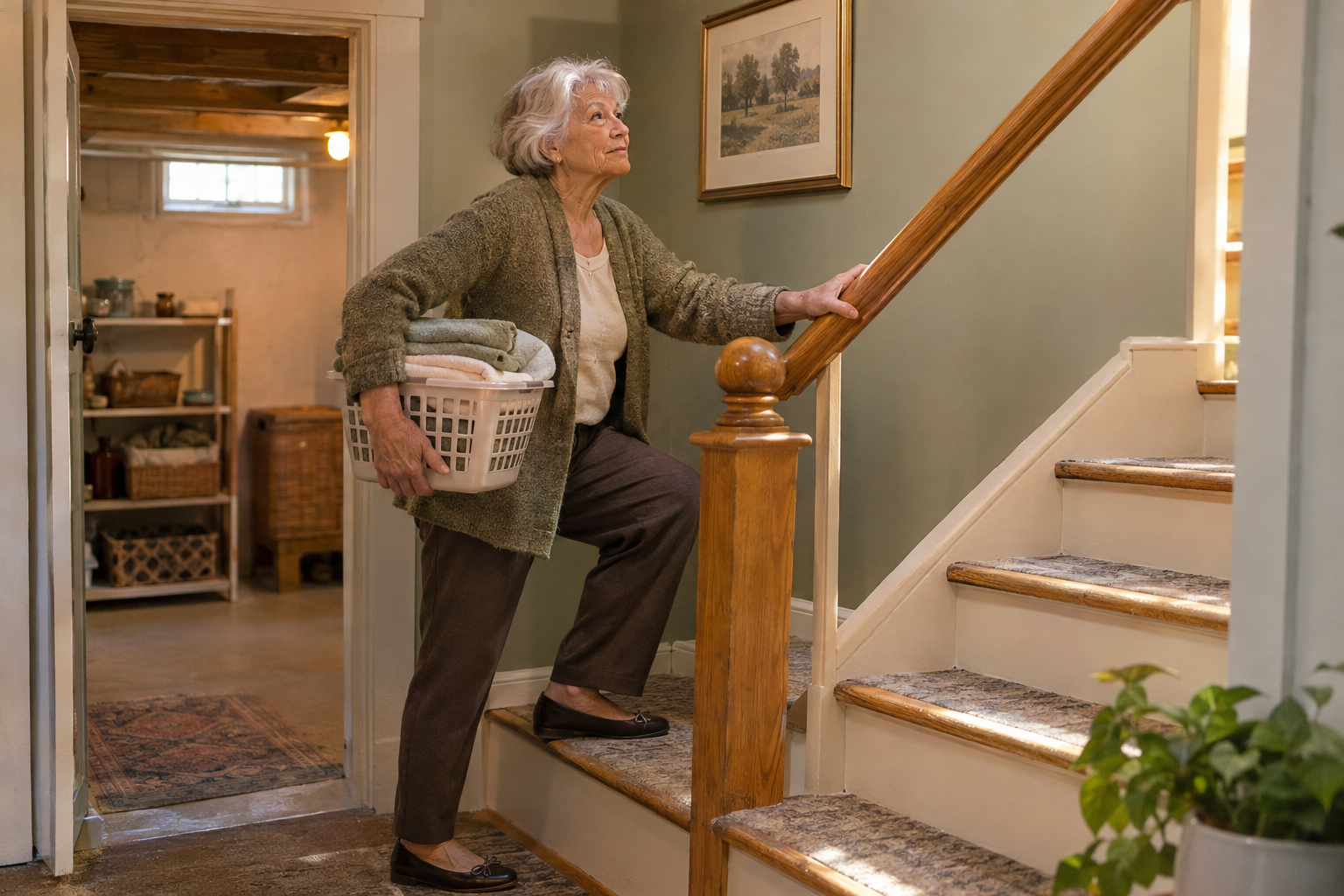
An older woman pauses on the stairs with a laundry basket at her hip and one hand on the railing.
When the task is personal, like bathing
“Can I ask you something a little personal? How are you feeling about getting in and out of the tub these days?”
Give them time to answer. Are they honest or just “blowing off” the response.
Options can be shared with them about an article you read about adaptive equipment. Discuss the idea of sitting on a shower chair or transfer bench. Using a hand-held shower head or long handled sponges. Discuss grab bars and that there are ones that are functional and less institutional looking. Do they like to soak in a tub? There are soaker options as well. Wanting to help or share an article is far less intrusive than asking for someone to stand in the bathroom or help them physically shower.
When they sat, “I’m fine” but you know otherwise
“OK, I just want to be supportive. Is there anything around the house that takes more effort than it used to?”
Especially with the holidays approaching, this can be an opportunity to offer a maid services twice a month for deeper cleaning or a regular shopping trip and meal together. Every family situation and proximity is different, but opening the conversation can lead to better understanding and problem solving together.
When you want to offer one small thing
“Would it help if I carried the laundry upstairs when I am here? I can leave it where you want it, and I’ll leave the rest to you.”
“Would it help if I brought over a tub seat to trial and you can let me know how you liked it.”
“I was thinking we could go grocery shopping together every week. We can spend some time together and I can always help you bring in the groceries if you like.”
When they are worried about being a burden
“I hear you. I can come by on Saturdays and I’d be glad to use some of that time to help. What would make your week easier?”
Maybe it’s just you. Maybe it’s family time. Maybe it’s having mom or dad over to your place for dinner and sending them home with left-overs. Maybe it’s taking them to a doctor’s appointment. Start with just being supportive and willing to help. It may help to remind them of all they have done for the family and wanting to he helpful and supportive in return.
When you are planning ahead together
“What parts of your routine are most important for you to keep doing your way? Let’s start there.”
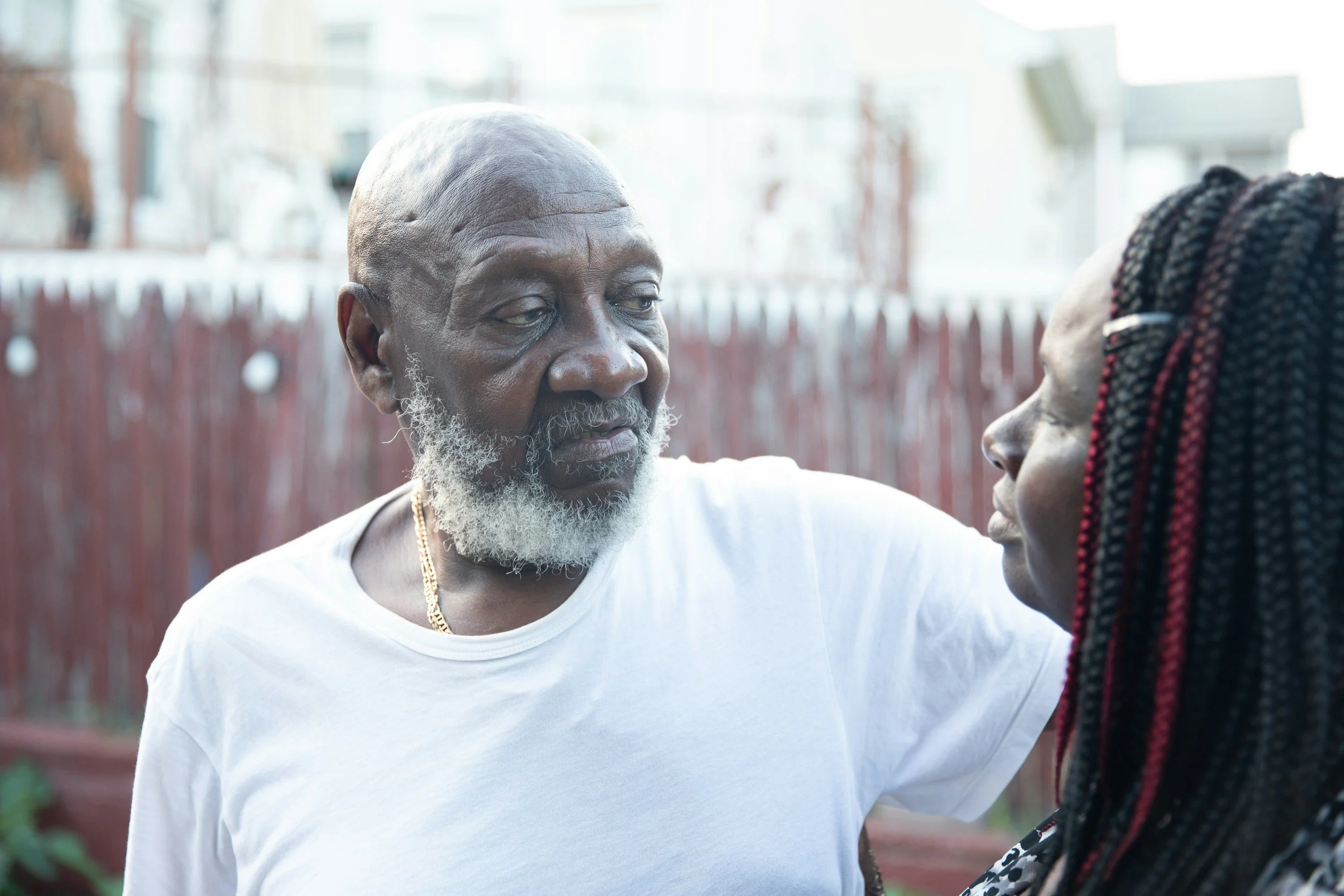
When you have already pushed too hard
“I got worried and overstepped by starting to make plans without asking you what you wanted. Can we start over? I’d like to hear how you see it. I want to help, not take over.”
When they still refuse
Try to find what they are truly saying no to. A parent might not want help with bills because they are worried about losing control of their finances. They may not want help with laundry if they are hiding an incontinence issue. They may conceal some cognitive deficits and want to keep everything the same at home because that’s where they are most confident. Knowing what is happening can help you as a family problem solve how to help and maintain as much independence as possible.
Try to show them how a small change can preserve a routine. If dad loves making Sunday dinner but struggles with getting the heavy roasting pan out, help find a better place to keep it for easier access. If they had a recent fall or loss of balance picking something up from the floor, show them how using a reacher to pick it up can help. If reading the bills is a challenge, maybe a magnifier or reader maintains privacy and helps them maintain independence.
Give them space and leave the conversation open. Tell your loved one you are there for them anytime they want to talk through whatever could make things easier. You can let them know how hard it is for you being worried about them. You can say something like, “I can come on Saturdays. I’m worried about what happens the days I am at work. Can we talk through what would help then?” In the end, you want them to maintain as much independence as possible. You just want them to be safe. As an occupational therapist, we teach how important independence is. You don’t want caregiver burnout and burden to become a reason why the aging adult can no longer live in the community. You don’t want to cause the reduced quality of life and mental health that is associated with independence and mobility. You want to support the person, adapt the activity or the environment, and maximize their ability to participate in or complete activities that are purposeful and meaningful to them.
So, next time you talk with your loved one, maybe ask.
“What is one thing you may have a little trouble with that you want to keep doing independently? Let’s work together to make it easier for you.”